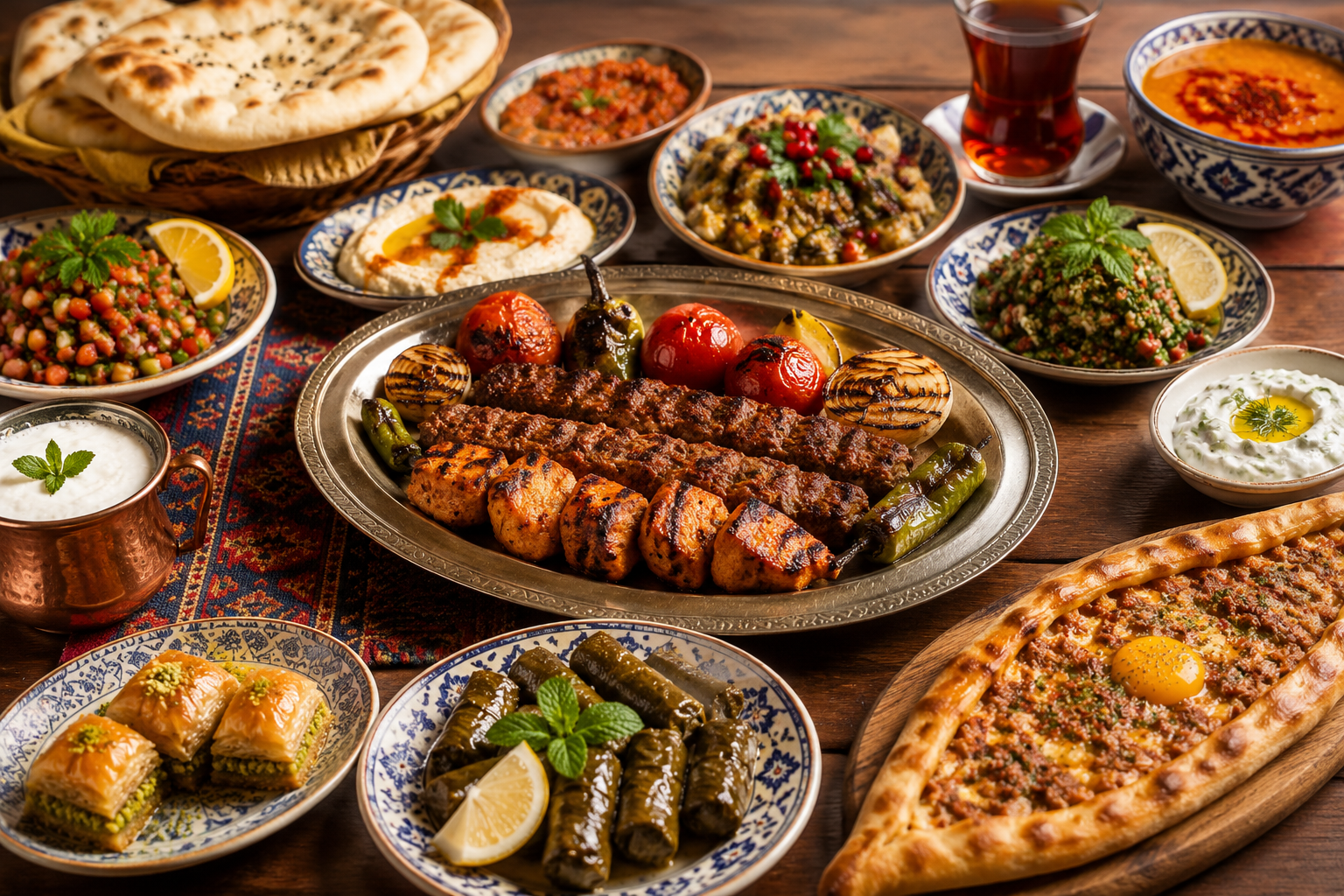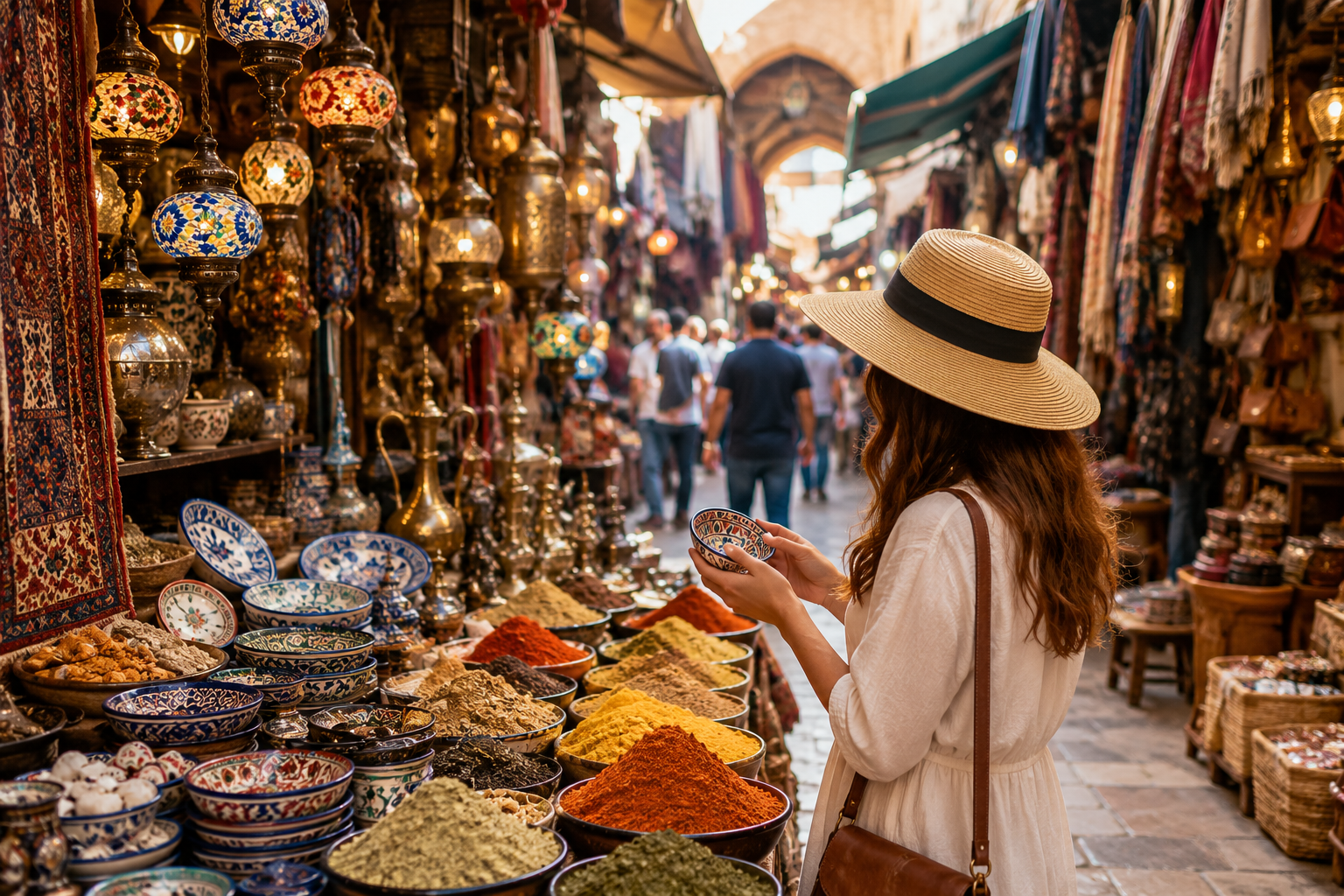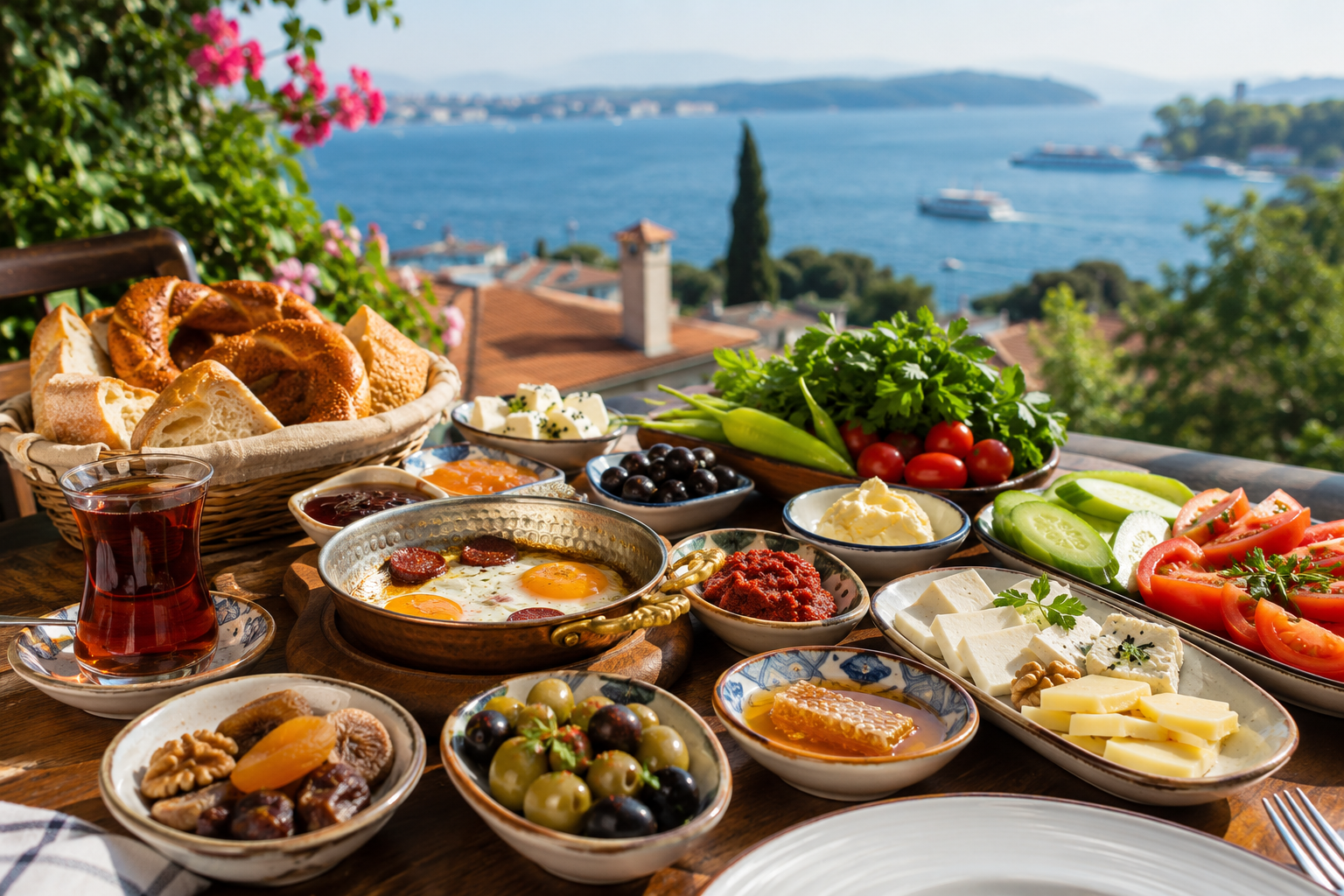
If a Turk invites you to breakfast, don't plan any other appointments for the morning. "Kahvaltı" - which literally means "before coffee" - is the most important meal of the day and can easily last for three hours. Find out what's on the table and why this ritual is so special here.
The basics: cheese, olives, tomatoes, cucumber
Every Turkish breakfast starts with the four pillars: at least two types of white cheese (beyaz peynir, similar to feta), black and green olives (ideally from Edremit or the Aegean region), sliced vine tomatoes and cucumber. Sounds simple - and it is. But the quality of the ingredients makes all the difference. Fresh tomatoes that taste like tomatoes and olives that shine in their own oil turn banal side dishes into the foundation of an unforgettable breakfast.
Honey with kaymak - the centrepiece
Kaymak is a kind of cream-cheese hybrid made from boiled buffalo or sheep's milk. Creamy, slightly sweet, with a thin skin. It is eaten in combination with blossom honey on fresh bread. If there's only one thing you want to take away from a Turkish breakfast, it's this. The best kaymak in the country is made in the region around Afyon, but you can also find fresh quality in better breakfast houses along the Riviera.
Menemen - the breakfast highlight
A pan of eggs, tomatoes, green peppers, onions and spices, slowly simmered. Sounds like shakshuka, but tastes different - softer, more egg-heavy, less spicy. Whether with or without onions is as much a question of faith in Turkey as pizza Hawaii is here. Menemen is traditionally served with plenty of white bread for dipping. In good breakfast houses, it comes sizzling straight from the oven.
Sucuk, pastırma and eggs
Sucuk is a spicy, dried beef sausage with garlic and cumin. It is traditionally served in slices with a fried egg in a pan ("sucuklu yumurta"). Pastırma is the air-dried version - similar to Bündnerfleisch, but with a spicy coating of Çemen (fenugreek paste). Both sausages are halal in most Turkish regions and belong on every proper breakfast table.
Sweet side dishes: jam, tahini pekmez
Homemade jams made from rose petals, green figs, quinces or bergamot are among the choices. One speciality is tahini pekmez: sesame paste mixed with grape syrup, a dark, sticky mixture that tastes like liquid halva - rich in nutrients and particularly popular in winter. Served with walnuts, almonds and sometimes helva (sesame paste sweet).
Çay - the ubiquitous tea
Turkish black tea, served in tulip-shaped glasses, without milk, with sugar cubes. It is topped up until you turn the glass over or put a spoon in it. Incidentally, coffee is rarely served for breakfast - Turkish mocha is more of an afternoon drink. The tea comes from the Rize region on the Black Sea, where tea has been grown on steep slopes since the 1940s.
Where can you find the best breakfast on the Riviera?
In Antalya, the Kahvaltı houses in the Konyaaltı and Lara districts are well-known - "Van Kahvaltı Evi" has several branches serving East Anatolian specialities. In Side, the best place to find traditional breakfast houses right by the sea is in the old town. Generally speaking, where there are many Turkish families, the breakfast is good. Expect to pay 250-450 lira per person for a full breakfast (as of 2024), including tea, and allow at least 90 minutes.
A Turkish breakfast is more than just food - it's a social ritual where people talk, laugh and don't look at their watches. If there's one thing you should take with you from Turkey after your trip, it's this attitude. Try it out at home: 15 small bowls, lots of bread, fresh tea. You'll be surprised how the morning suddenly looks different.