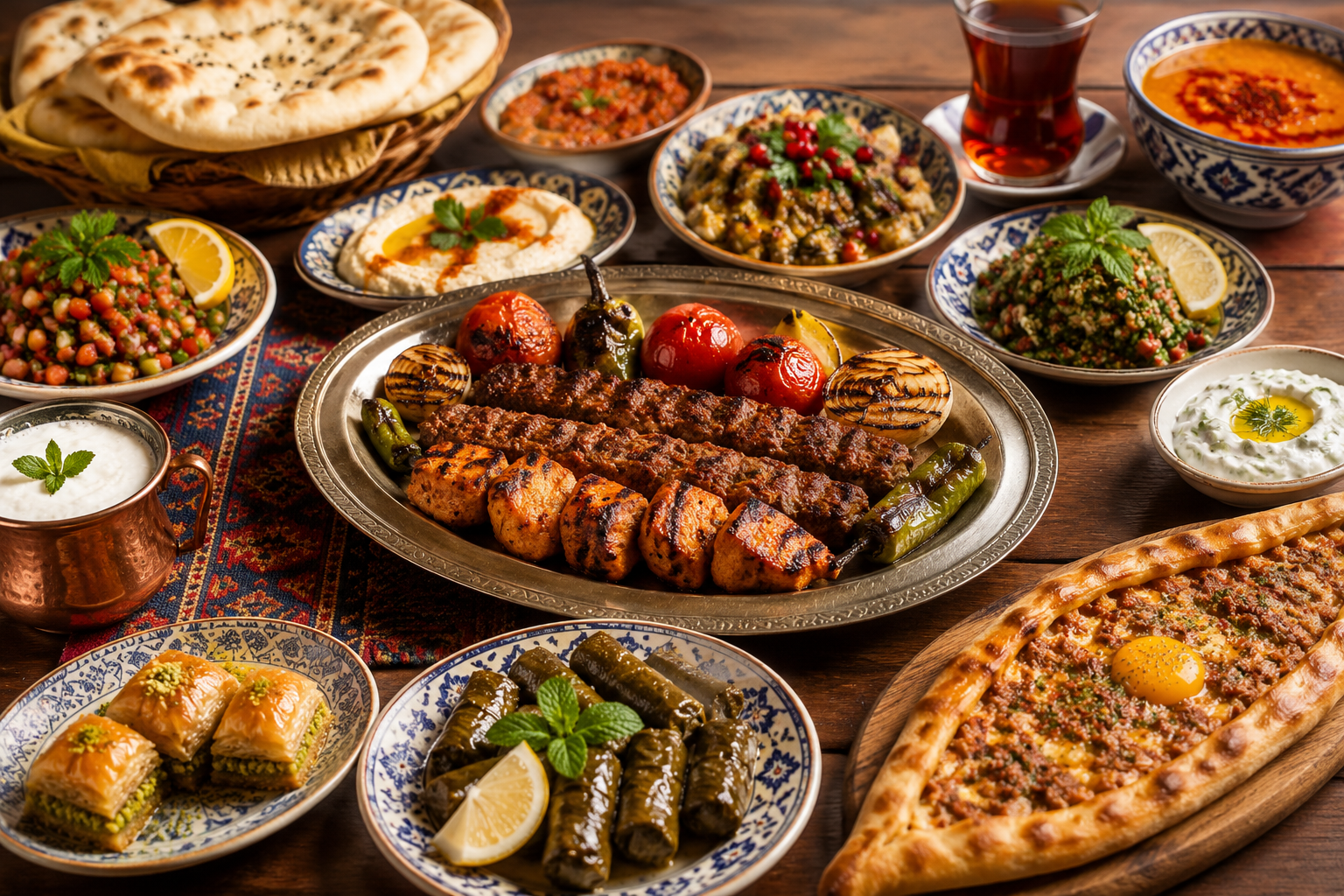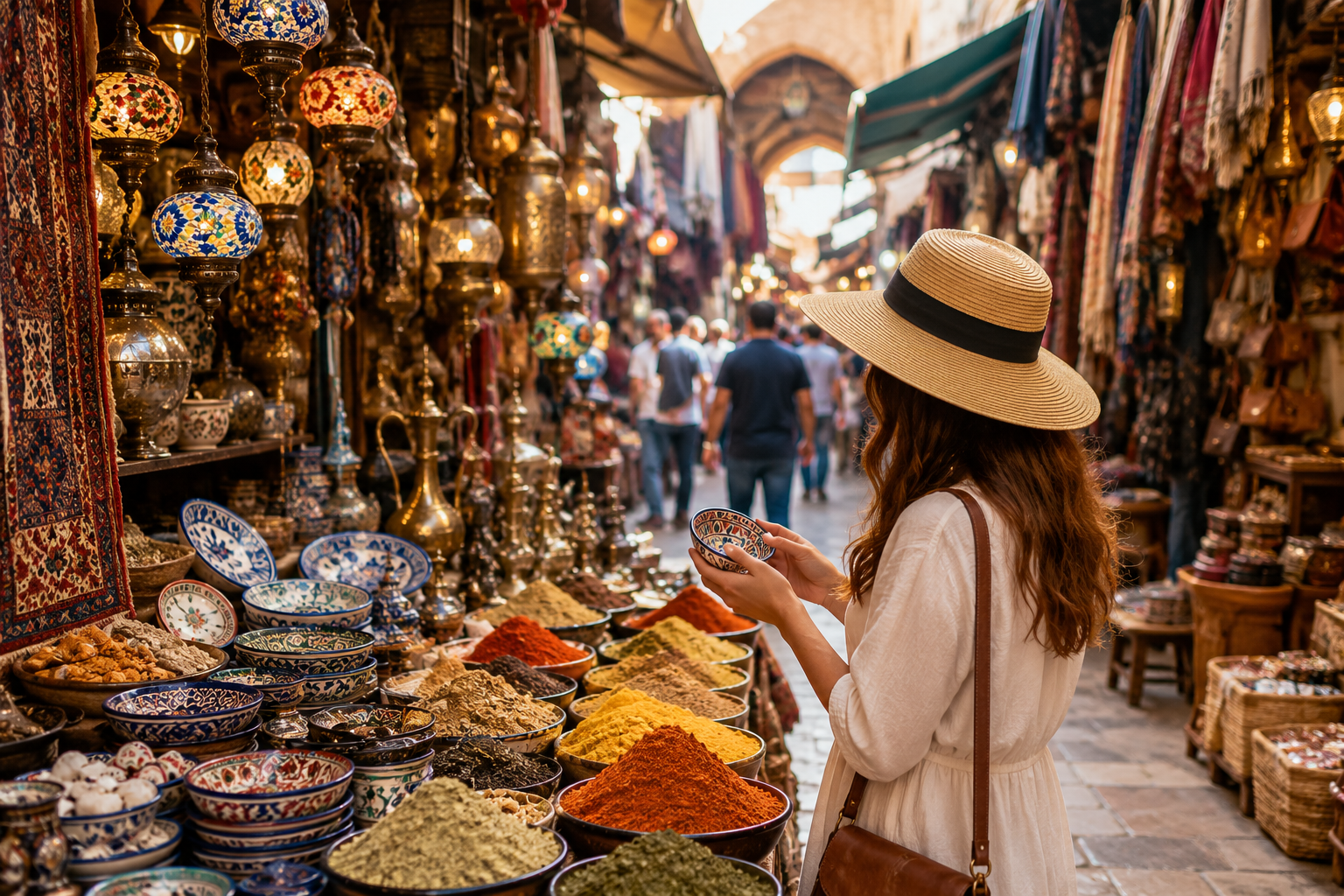
The tourist bazaars in Side and Alanya are full of "Made in China" T-shirts and fake brand-name watches. But ten minutes further on, in the neighbourhoods where the locals shop, you will find weekly markets with roasted pistachios from Gaziantep, hand-woven carpets from Konya and olive soap that has been produced in the same family for generations. Here's where to find them.
Pazarcılar Çarşısı (Antalya, Wednesday)
The largest weekly market in Antalya city centre. Wednesdays from 7 am to around 4 pm, in the Üçgen district. This is where the locals shop: Mountains of pomegranates, fresh herbs, all kinds of olives, Turkish honey from the mountains. No souvenirs - this is a real food market. Come hungry: Gözleme stalls (handmade filled flatbreads) are part of the experience.
Manavgat weekly market (Monday)
About an hour east of Antalya, in Manavgat town itself (not in the tourist area). The largest market in the region on Mondays: 200+ stalls, everything from fruit to fabrics and local ceramics. Here you can still find genuine Yörük (Anatolian nomadic) woven goods - hand-woven blankets and carpets at fractions of the tourist prices. Plan to spend half a day here.
Kaleiçi Bazaar (Antalya Old Town)
The historic centre of Antalya is a touristy labyrinth of a bazaar, but if you know where to go, you'll find some real gems. Look for the coppersmiths' workshops in the side streets (not the finished stalls!) - you can watch them hammering and buy directly from the craftsman. Also good: second-hand bookshops with old Ottoman prints, small galleries with local artists.
Kalkan Thursday market
A small market in the idyllic harbour village of Kalkan, around 200 km west of Antalya. Thursdays in the morning. Smaller selection than Manavgat, but more relaxed and with better quality food (organic tomatoes, farmhouse cheese, fresh eggs). Very popular with the many British expats living in Kalkan - English is often understood here.
Side Sunday market - the honest version
The side market on the outskirts of town on Sundays (not the tourist bazaar in the old town) is large, lively and used by locals. Here you can buy spices by weight (no pre-packed tourist stuff), fabrics by the metre, olive oil soaps, and at the end of the market there is an area with second-hand items and curiosities - sometimes real treasures.
What you should look out for when shopping
Firstly: Trading is allowed and expected, except in supermarkets and for food (where prices are fixed). Rule of thumb: divide first offer by 2, then negotiation basis. Secondly, payment in Turkish lira is cheaper than in euros (unless you are a very good negotiator). Thirdly, never buy carpets and expensive items at the first stall - look around, compare, come back later if the offer was really good. Fourthly: there are also fakes in real bazaars. Saffron "from Iran" for 5 euros per gram: no, it's turmeric. Real saffron costs 30-50 euros per gram.
What to really buy?
Worthwhile souvenirs: hand-woven carpets/kelims (only if you know your way around or go with a connoisseur), olive oil soap from Edremit, Turkish honey (genuine mountain varieties, not the industrial honey), Çay jars from Çukurova, pistachios from Gaziantep, Turkish spices (sumac, pul beaver, fenugreek seeds). What you can leave behind: Branded fake watches (often come out at customs), "antique" coins (usually newly produced), cheap saffron.
The real treasures of Turkish markets can be found in the weekly markets in the suburbs, not in the bazaars on the tourist mile. If you take your time, dare to speak a little Turkish ("Merhaba" and "Teşekkür ederim" work wonders) and don't accept the first thing on offer, you'll come home with things that will still be worth talking about in 20 years' time. And sometimes the best souvenirs are not the most expensive ones, but the ones with the best story.