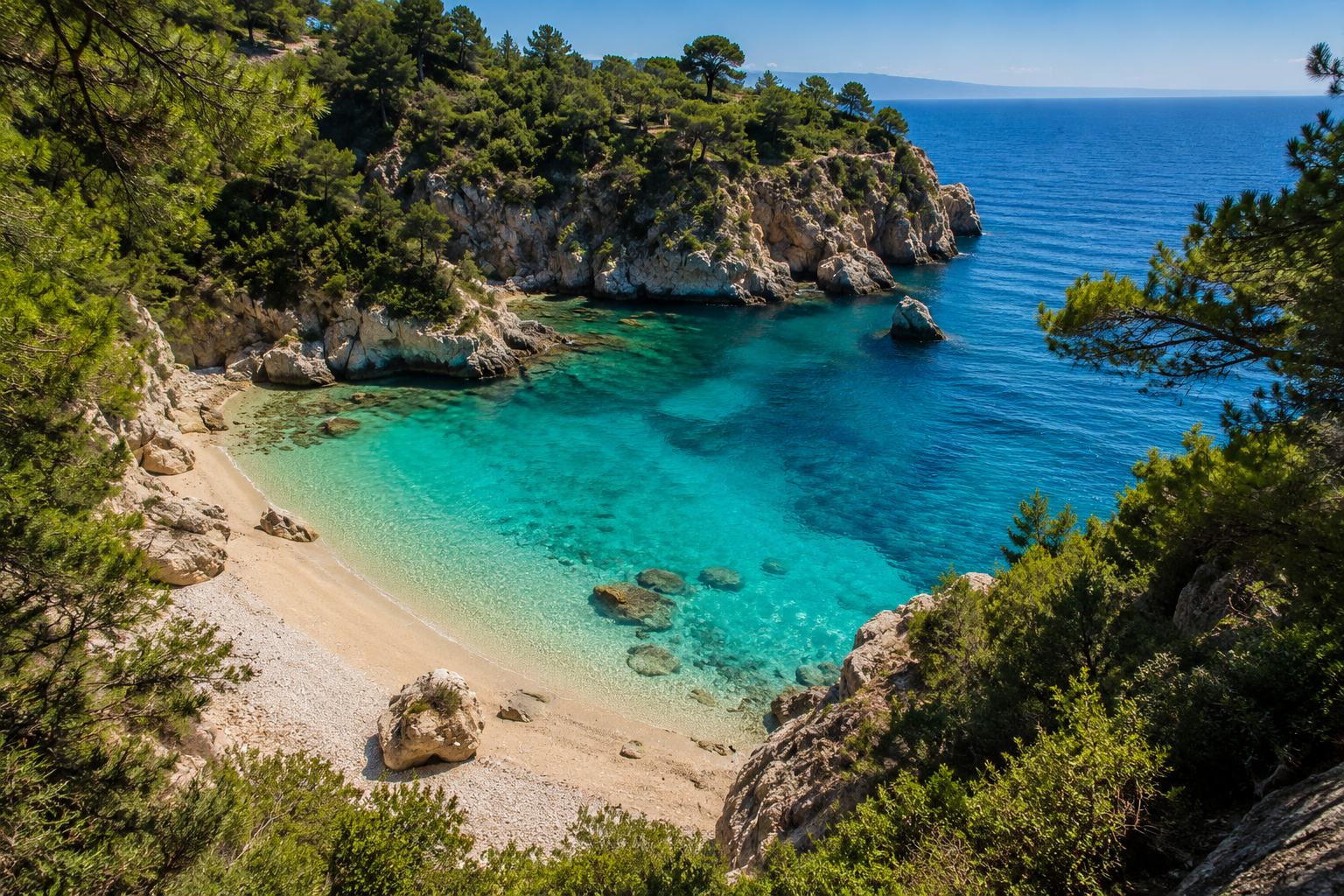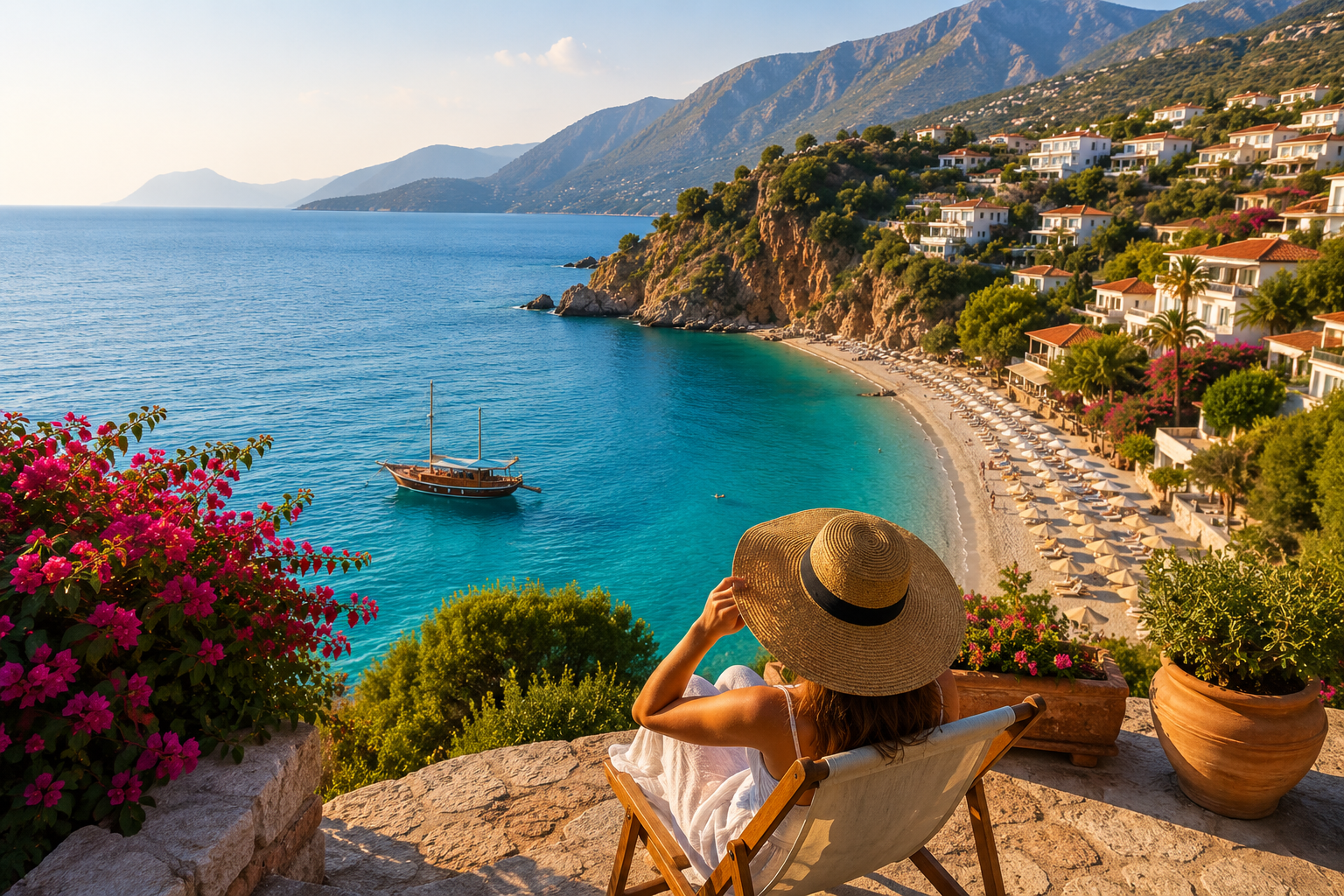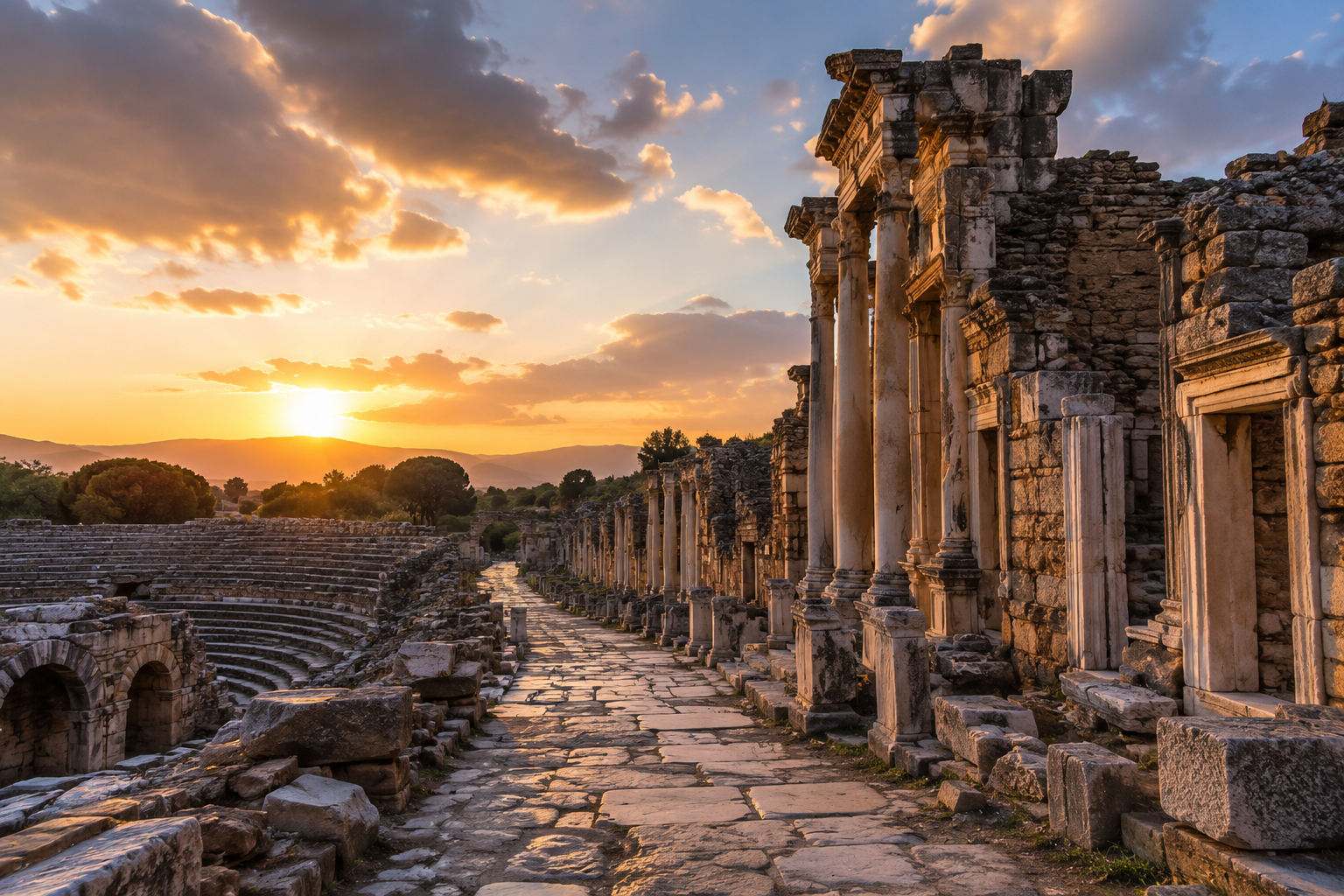
When you go swimming on the Turkish Riviera, you are swimming in a sea that the Lycians and Greeks sailed 2,500 years ago. On land, the traces of these civilisations are often surprisingly well preserved - sometimes so well that you wonder why these places are not world-famous. Six sites you should have seen on a trip to the Riviera.
Aspendos - The best preserved Roman theatre in the world
Located around 45 km east of Antalya, the theatre of Aspendos from the 2nd century AD is so well preserved that performances are still held there today - the Aspendos Opera & Ballet Festival takes place every summer. The theatre seats 15,000 people and the acoustics are legendary. Sit in the top row and let someone whisper below - you'll hear it. Admission approx. 25 euros. Plan 2-3 hours, also for the neighbouring aqueduct.
Perge - The forgotten city
Only 17 km east of Antalya, but often overlooked by tourists. Perge was one of the most important cities in Pamphylia, founded around 1,000 BC. You walk through a complete ancient city: the city gate with the Hellenistic towers, the colonnaded street with a water channel in the middle, the stadium (12,000 seats) and a huge theatre. The marble works and statues found here fill an entire floor of the Antalya Archaeological Museum. Half a day, approx. 15 euros entrance fee.
Side - antiquity in the centre of the beach resort
Side is now a tourist resort, but the old town stands directly on the ruins of the ancient city. You walk through the pedestrian zone, eat ice cream - and next to you the columns of the Temple of Apollo tower into the sky, at the end of the peninsula, right by the sea. One of the most beautiful places on the Riviera at sunset. Also in Side: a huge ancient theatre (admission approx. 12 euros), the Agora and an interesting museum in a former Roman thermal bath.
Termessos - Eagle's nest in the mountains
If you only visit one site, make it this one. Termessos is located at an altitude of 1,000 metres in the Taurus Mountains, nestled in a national park. The city was never conquered by Alexander the Great - he called it "Eagle's Nest" and moved on. You reach the ruins via a 30-minute climb through pine forest. Once at the top, you will see a theatre with a stage suspended 1,000 metres above the valley, ancient cisterns, a gymnasium and hundreds of rock tombs. Less touristy, lots of atmosphere. Bring sturdy shoes and water.
Olympos and Chimaira - myth and fire
Near Çıralı are the ruins of the ancient city of Olympos, surrounded by oleanders and pine trees. The atmosphere is different to Perge or Side - wilder, more romantic, you feel like a 19th century explorer. Directly above Olympos, the eternal flames of the Chimaira burn: natural gas seeping out of the rock that has been burning continuously since ancient times. In mythology, this was the cave of a fire-breathing monster. Hike up at sunset, the view is surreal.
Patara - The cradle of the western world
About 200 kilometres west of Antalya, at the eastern end of Patara beach, lies the ancient town of Patara. St Nicholas was born here (the real one, not the one with reindeer). This is where the parliament of the Lycian League stood - a democracy that was the model for the US constitution (according to US Federalist Papers No. 16). You can wander through the rebuilt parliament building, then walk down the hill to the beach - and encounter an 18-kilometre sandy beach along the way. Admission covers both ruins and beach.
The Turkish Riviera is one of the densest archaeological areas in the Mediterranean. If you only treat the region as a beach destination, you're missing half the story. Plan at least one ancient site for each of your stops - the combination of swimming in the Mediterranean and walking through Roman theatres is what makes the Turkish coast so special.