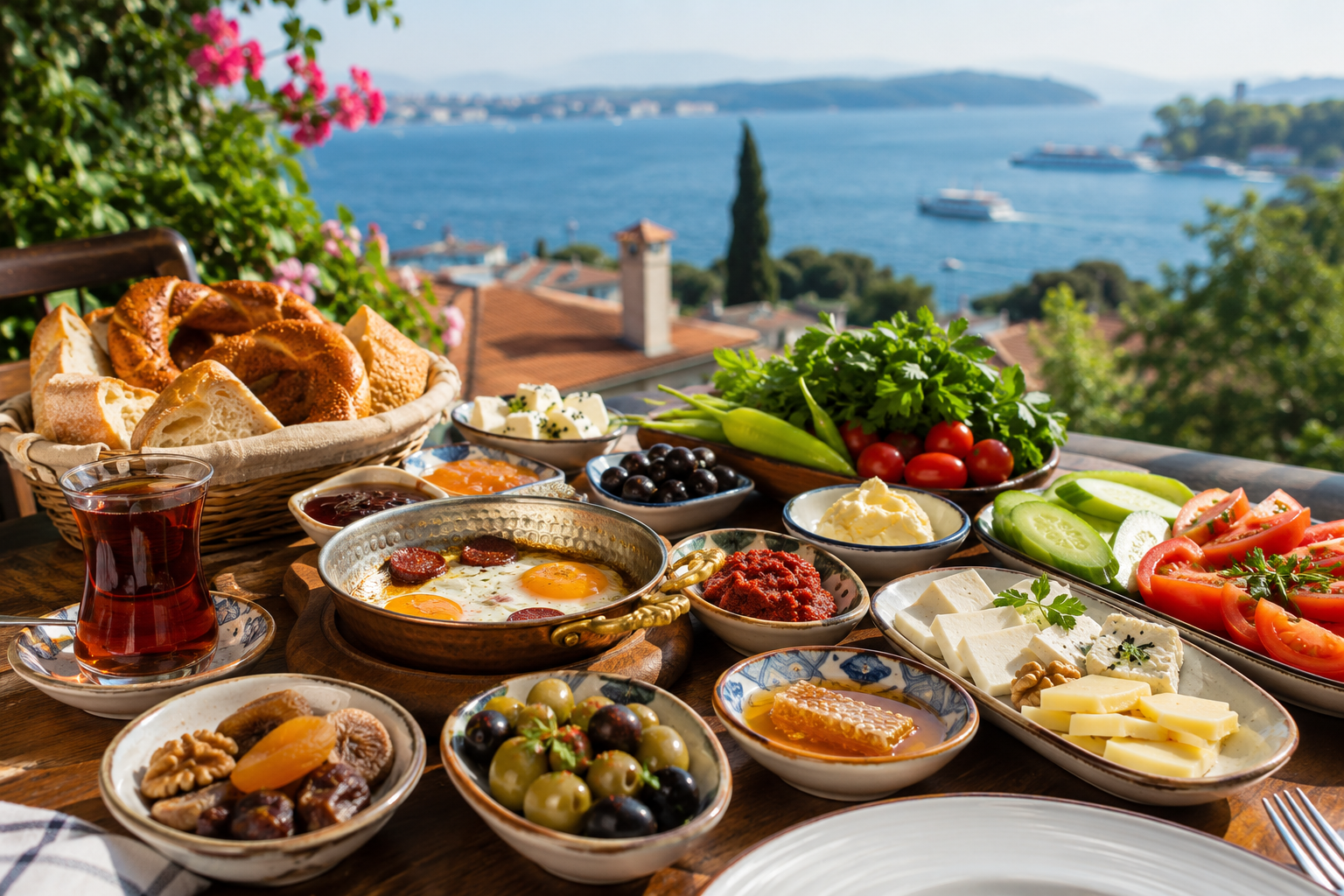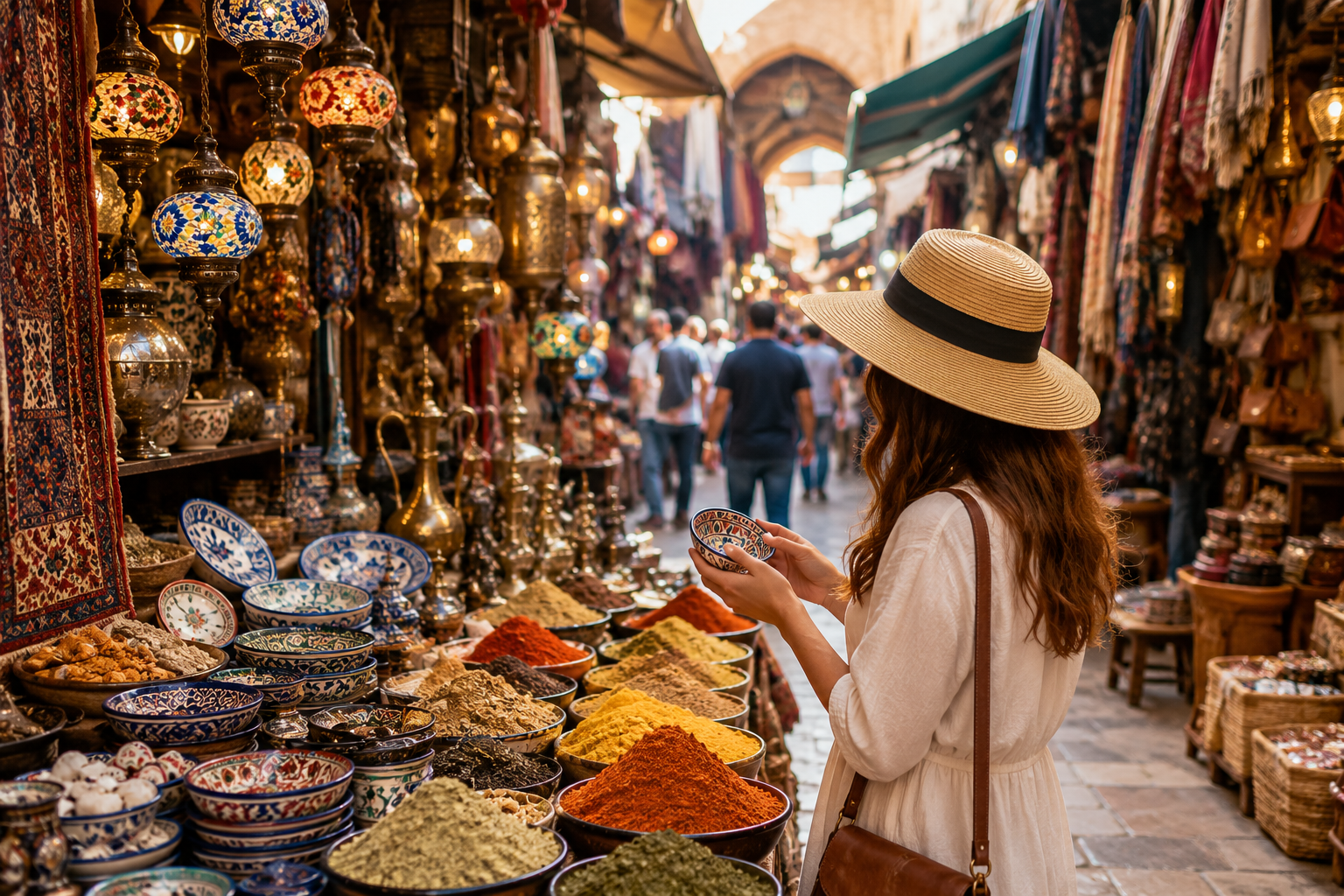
Turkish cuisine is one of the three great world cuisines - alongside French and Chinese. It draws on a thousand years of Ottoman court cuisine, thousands of years of Anatolian peasant cooking and influences from the Balkans to the Caucasus. Here we show you what you really should try and where you can get it.
Meze - The best foreplay
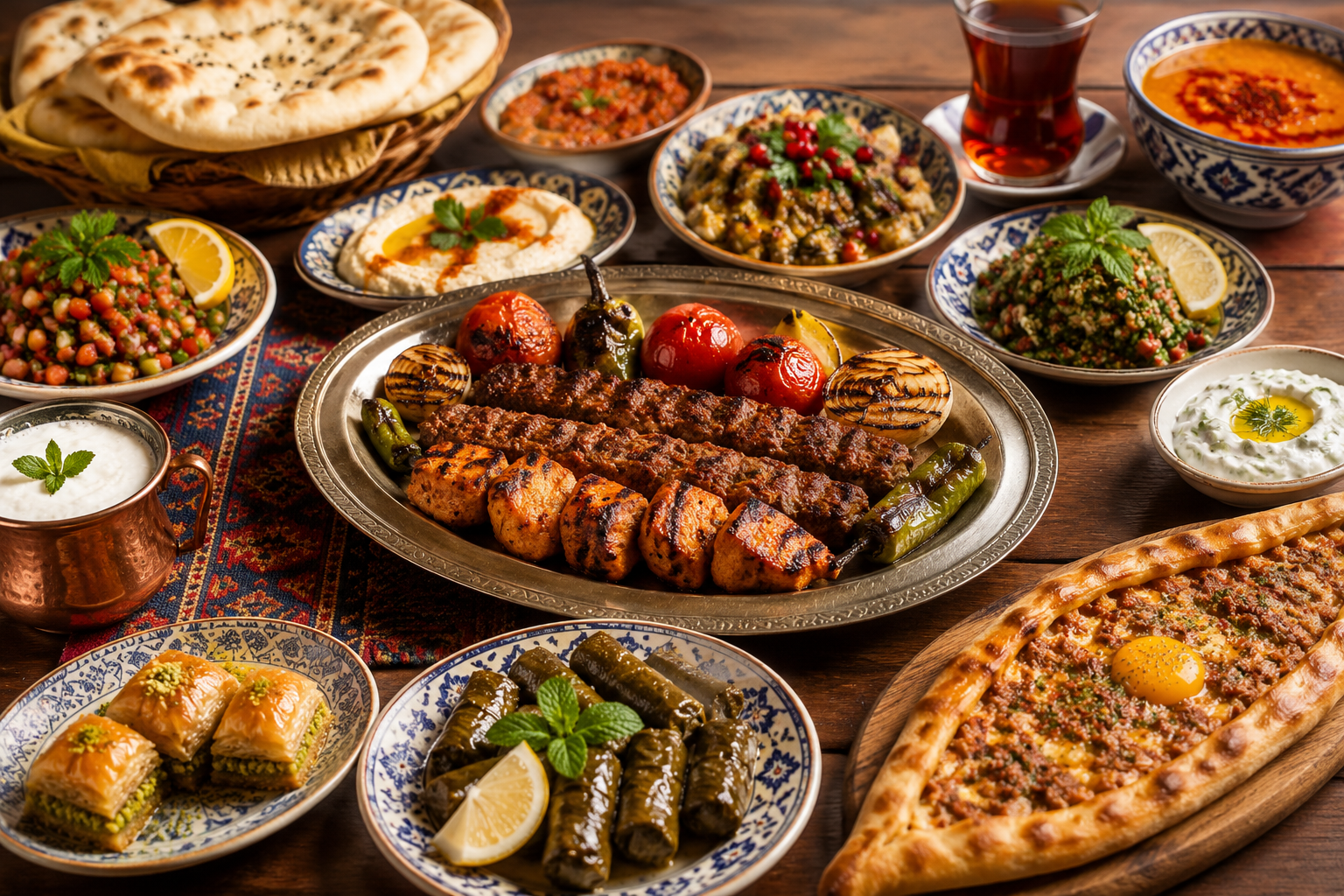
Meze are small appetisers that you order with rakı or wine. The classic ones: Haydari (yoghurt with garlic and dill), Patlıcan Salatası (smoked aubergine salad), Cacık (cold yoghurt with cucumber), Ezme (spicy tomato and pepper paste), fried sardines, stuffed vine leaves. In Antalya, the best places to eat are the fish restaurants right by Kaleiçi harbour or in Kalkan/Kaş. Expect 8-12 different meze on a table, with flatbread and rakı.
Pide and lahmacun - the Turkish "pizzas"
Pide is a boat-shaped pastry filled with cheese, minced meat, sucuk or eggs - fresh from the stone oven. Lahmacun is thinly rolled dough topped with minced meat, tomato and parsley, folded and eaten with lemon. Both dishes cost between 80-150 lira in good places. Recommendation: look for small pide salonu in residential neighbourhoods, not on the tourist mile.
Köfte - Turkish meatballs with a history
Each region has its own variety of köfte. Inegöl Köfte (Bursa region, small and compact), Adana Köfte (long on a skewer, spicy), Tekirdağ Köfte (with plenty of pepper and parsley). Traditionally, köfte are served with bulgur, tomato salad, hot green peppers and plenty of bread. A köfte parlour usually has a simple menu - that's good, they focus on one thing.
Kebab - More than just kebab
Forget the currywurst kebab from Berlin. Real Turkish kebab has endless varieties. İskender Kebab (thinly sliced lamb with tomato sauce, yoghurt and brown butter), Adana Kebab (handmade minced meat skewers), Beyti Kebab (wrapped in yufka dough, baked in the oven), Çöp Şiş (small lamb skewers). Top addresses are those with coal ovens instead of gas, the flavour is different.
Mantı - Anatolian mini maultaschen
Tiny dumplings filled with minced meat, served with garlic yoghurt and hot paprika oil. A speciality from the Kayseri region, but popular all over the country. You can recognise good mantı by their size - the smaller the pockets, the higher the quality. Homemade mantı is an hour's work, so it is a little more expensive in better restaurants.
Balık Ekmek - fish sandwich from the Bosphorus
Strictly speaking an Istanbul dish (served at Eminönü harbour), but you can also get it in Antalya. Freshly grilled mackerel fillet, in bread with onions and parsley. Simple, cheap (approx. 50-80 lira), very tasty. You can find it on the fishing boats in Kaleiçi harbour.
Baklava and Künefe - the sweet stars
Baklava: thin filo pastry, pistachios, sugar syrup. The best ones come from Gaziantep - if a café advertises this, it's a sign of quality. Künefe: a sweet and savoury cheesecake made from Kadayıf threads, melted cheese and syrup, served hot. A speciality from Hatay, very popular after a sumptuous dinner. In Antalya, we recommend "Köşk Künefe" in the old town.
Çay and Türk Kahvesi - the drink rituals
Black tea in tulip-shaped glasses all day (without milk, with sugar cubes). Turkish coffee in the afternoon: unfiltered, boiled in copper cezve, with foam on top and grounds at the bottom - never stir, never drink the grounds. It is traditionally served with a piece of lokum (Turkish delight) and a glass of water. Once you have familiarised yourself with the tradition, you will never want to miss it again.
Understanding Turkish cuisine is a life project. But the first steps are fun. Try at least one local speciality dish in each city, ask locals about their favourite restaurant (not the hotel porter), and be brave when ordering - the greatest discoveries happen with dishes you've never heard the name of.